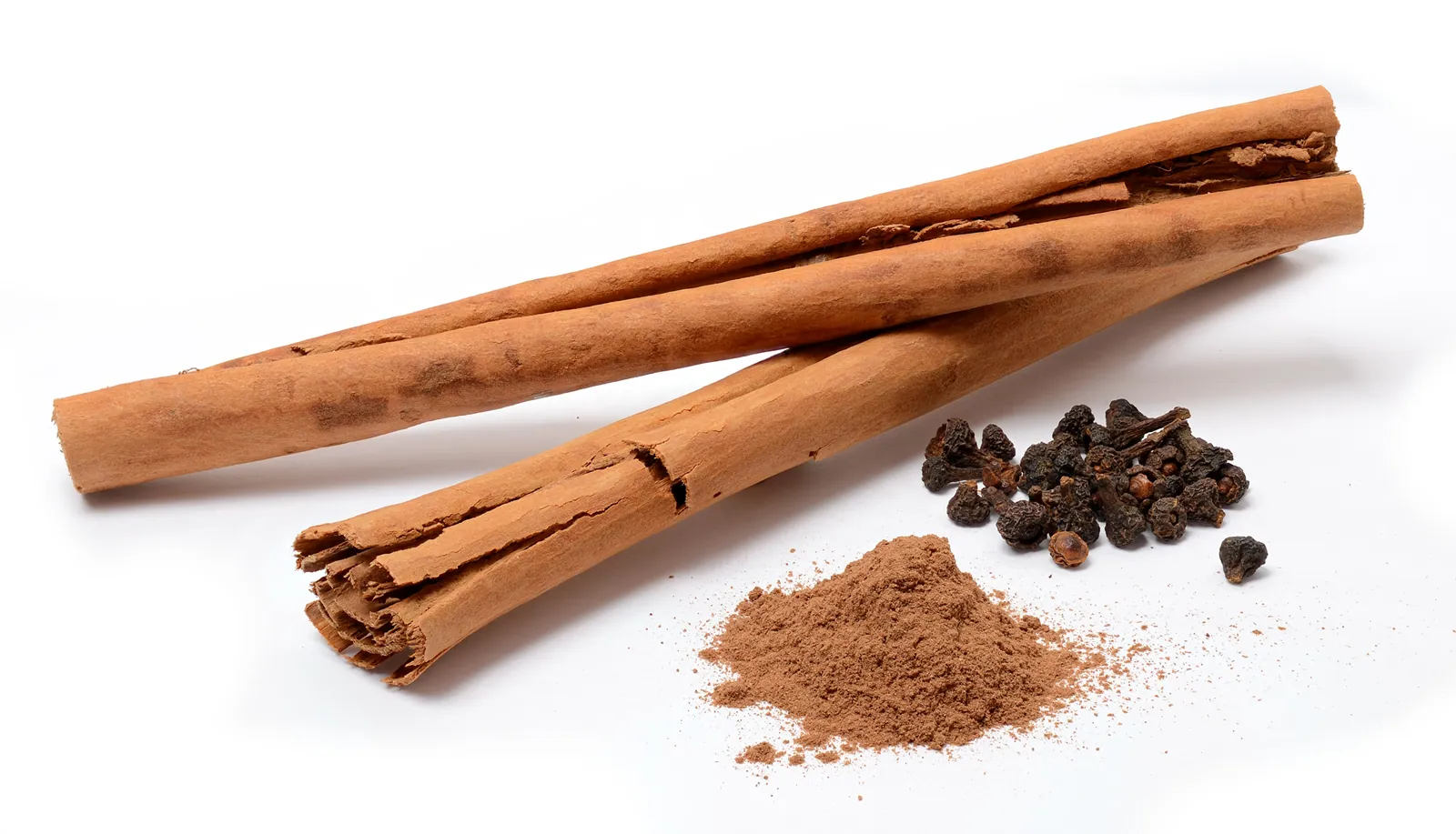
What is Ceylon cinnamon?
Kew accepts the botanical name Cinnamomum verum and identifies Sri Lanka as its native range. Native origin and the country where a particular product was grown are separate matters, so a botanical name alone does not establish the origin of a packet.
Ceylon cinnamon and cassia are related traded products that need accurate naming. Cassia is not automatically counterfeit: the question is whether the species, product and origin are described honestly. When buying, ask what the product contains rather than relying only on the word “cinnamon”.
From stem to prepared bark
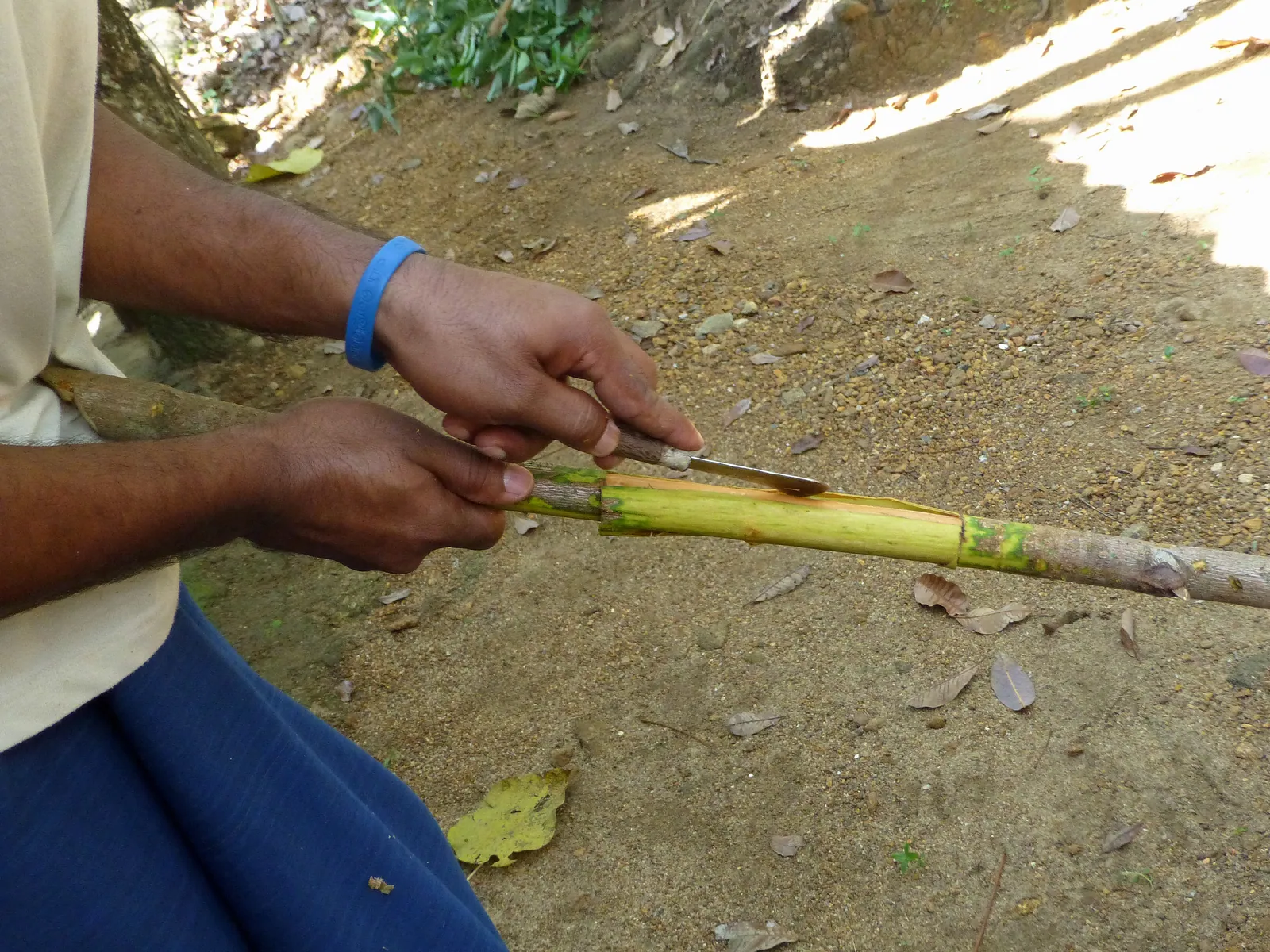

The Department of Cinnamon Development describes a sequence beginning with removing branches and leaves and scraping the outer bark. The stem is rubbed, and a specialist knife is used to lift the bark. Prepared sheets are then assembled with smaller pieces into quills and dried.
Watch the transitions if you have the opportunity: the prepared stem, the lifted sheet and the assembled quill show different stages. Ask the person demonstrating to explain what they are doing and how they judge the material. The finished product makes more sense when you can follow the actions that produce it.
A demonstration introduces this work; professional skill develops through practice and training. Sri Lanka's National Institute of Plantation Management lists cinnamon field and factory operations within its recognition-of-prior-learning programme. A brief visitor activity is a different experience from occupational competency assessment.
The people belong in the history
Cinnamon's trading history also involves the people required to gather and prepare it. Historian Guido van Meersbergen describes the Dutch East India Company's dependence on local intermediaries and compulsory services, pressure on Salagama cinnamon workers and resistance. These relationships give the spice's history a human and political dimension beyond ships and export cargoes.
Keep that historical setting distinct from the people working today. Shanka P. Dharmapala's study examines changing arrangements in cinnamon production, including teamwork and workers' autonomy. It is a situated account, not a description of every estate. Present-day workers deserve to be encountered through their own work and explanations rather than assumptions about an inherited identity.
Know which form you are comparing
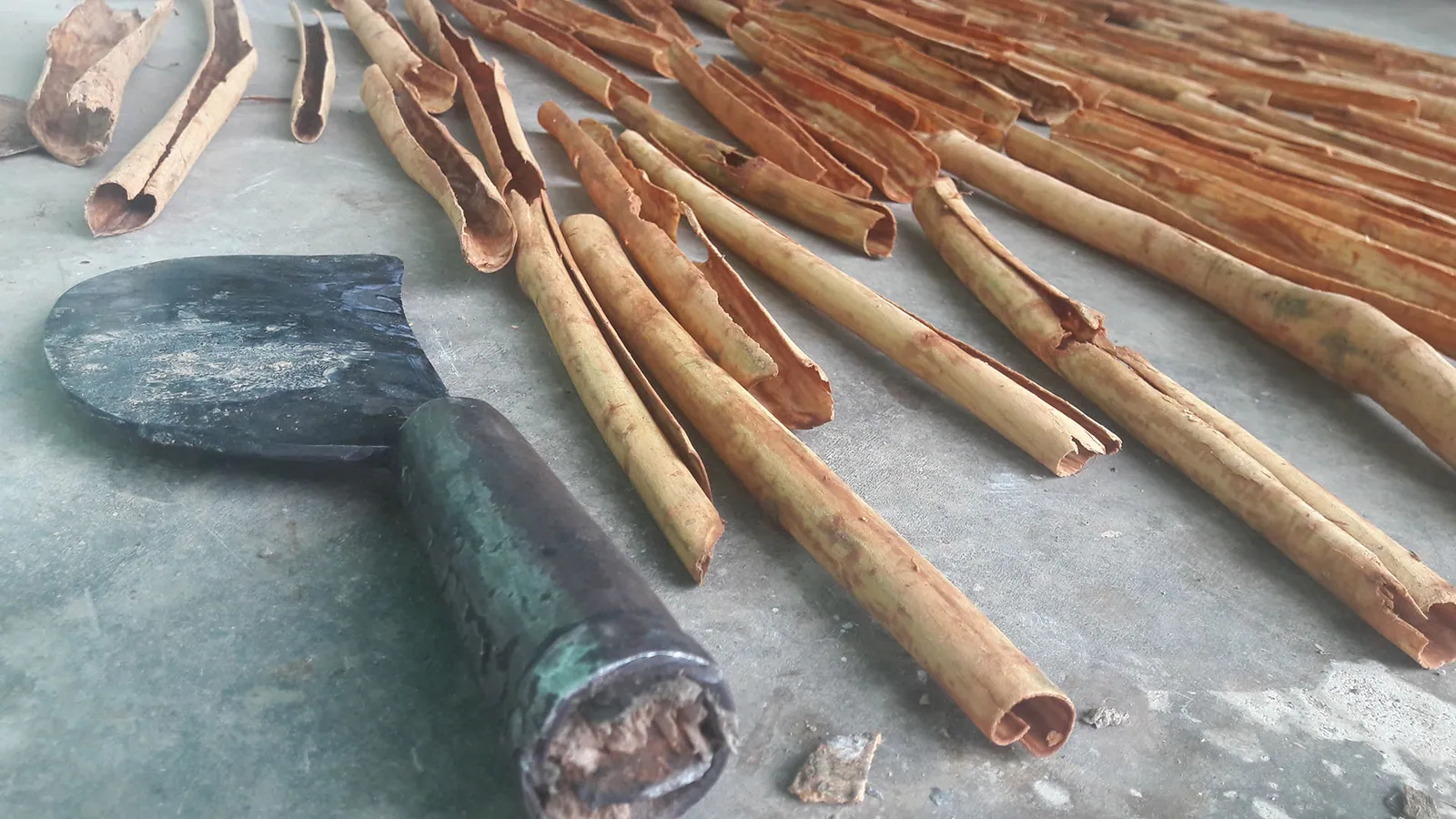

The same ingredient reaches a shop in several forms. Begin with the product you want to use before comparing prices or grade labels.
Quill grading considers physical characteristics including diameter and surface appearance. Names such as Alba and the C, M and H families occur in the Department's account. Ask what a seller's designation means for the actual product; a grade name is not itself an organic certificate, proof of geographical origin or a medical claim.
- Whole quills · The stated species and origin, grade if advertised, net weight and pack information.
- Cut quills or pieces · How the product is described and whether the quoted weight and grade refer to this form.
- Powder · Ingredient identity, origin, packer and batch information; appearance alone cannot establish the source quill grade.
- Bark oil or leaf oil · Which product it is and its intended use. Do not assume an oil is interchangeable with a culinary packet.
Origin, grade and certification answer different questions
A botanical name identifies a plant. A stated origin tells you where the product is represented as coming from. A physical grade describes product characteristics. A certification mark has its own eligibility and licensing conditions. These are useful distinctions when a pack carries several claims.
For example, EDB has a licensing scheme for its Pure Ceylon Cinnamon mark. The existence of that scheme does not establish that every seller displaying similar wording holds a valid licence for the product you are considering. Ask for evidence that matches the seller and product. Equally, absence of a voluntary mark does not by itself establish that cinnamon is counterfeit.
Before purchasing, look for:
Take time to compare. A gift pack, powder and whole quills need not have the same price per gram, and a higher price alone does not authenticate a claim.
- The product name, ingredient information and stated origin.
- The packer's or supplier's identity and net weight.
- Batch/date and storage information.
- An explanation of the grade or certification claims, if any.
- The price for that exact form and pack size, with a receipt.
See where cinnamon appears in food
Cinnamon can appear in preparations beyond a hot curry. Nuzrath Shazeen's ghee rice and watalappan provide two examples, one a rice dish and the other a dessert. Her accounts connect these preparations with family memories and celebrations. They offer ideas for what to ask about at a meal, with room for another cook's version to differ.
If food is your main interest, ask the kitchen what it is preparing and how the seasoning is used. Our Sri Lankan food guide offers a broader starting point for meals and local food interests.
Plan a visit around the activity
Some providers advertise plantation walks, factory interpretation, peeling participation, oil-distillation observation or tastings. These are different activities and may not all happen during the same visit. Confirm what is included on your chosen date rather than assuming a plantation is continuously demonstrating every stage.
Ask where to meet, how long the visit lasts, whether you will watch or participate, the language used and the total cost. Discuss paths, steps and facilities if they affect your comfort. If there is a retail stop, ask whether purchasing is optional. Make the transport arrangements part of the same planning conversation, especially when fitting the visit between overnight bases.
Make time for the craft
Tell us if you would like cinnamon production to be part of your journey. Share your travel dates, overnight bases and whether you prefer watching a process, learning about plants or exploring food. We can discuss the interest alongside your route, with the host, activities, availability and quotation confirmed separately.
What would you like to explore?
Share only what you already know. The remaining questions can be discussed as the plan becomes clearer.
- Plants, production or cooking interests
- Travel dates and overnight bases
- Watching a demonstration or guided participation
- Group size and any comfort or access needs
- Food preferences and ingredients to discuss
Things worth asking before you decide.
Can a cinnamon visit include trying the peeling?
Some hosts advertise guided participation. Ask directly whether it is available for your date and group, and what the activity involves. An advertised demonstration does not mean every visitor will use tools.
Does a grade label prove cinnamon came from Sri Lanka?
No. Grade and geographical origin are different claims. Check the stated origin and any supporting certification separately, matched to the actual product.
Can I identify the original quill grade from powder?
Grinding removes the visible quill characteristics. Ask for traceability behind a grade claim rather than attempting to authenticate it from the powder's appearance.
Does a cinnamon demonstration include a plantation walk?
Check the host’s programme before arranging a visit. A demonstration, a walk among growing plants and a tasting are different activities, and may not all be included.
Sources and review date.
Practical arrangements still need confirmation for your dates. Information reviewed 29 October 2026.
- Department of Cinnamon Development, post-harvest technology
- Kew POWO, Cinnamomum verum
- EDB cinnamon background
- National Institute of Plantation Management, RPL
- Guido van Meersbergen, accepted manuscript
- Shanka P. Dharmapala, Cinnamon Peelers in Sri Lanka
- EDB Pure Ceylon Cinnamon mark
- ghee rice
- watalappan
- Gradely's advertised experience
Tell us what you know so far.
We can discuss the practical route, vehicle and quotation before anything is confirmed.